Health & Safety Policy — Business Waste Removal Blackwall
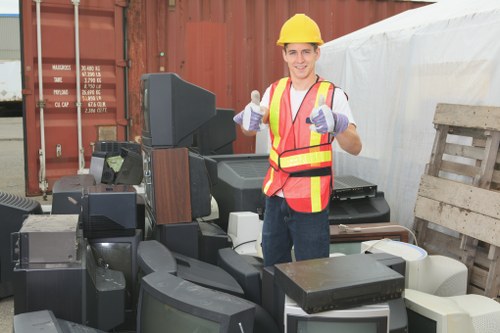 Purpose: This Health and Safety policy sets out the commitments and arrangements for safe operation within our business waste removal Blackwall activities and related commercial rubbish removal work. The policy applies to all staff, contractors and visitors engaged in waste collection, transfer and disposal across our service area. It is designed to ensure risks from waste operations are identified, assessed and managed to protect people and property.
The company is committed to maintaining a safe working environment through effective management, supervision and the provision of adequate resources. All employees must comply with safe systems of work and take reasonable care for their own health and safety and that of others. We promote a safety-first culture across our rubbish removal services and strive for continuous improvement in our waste handling procedures.
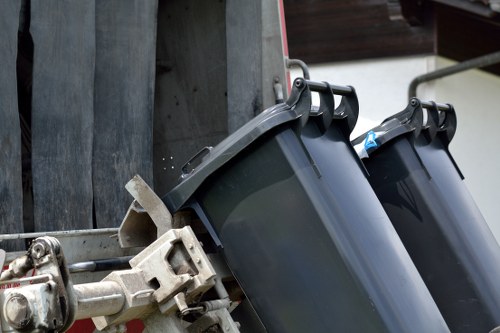 Scope: This policy covers day-to-day business waste removal tasks including commercial bin lifts, on-site clearance, skip loading, vehicle operation and segregating recyclables from general waste. It also addresses hazardous materials handling, personal protective equipment (PPE), manual handling techniques and vehicle-related risks associated with our rubbish collection and refuse removal services.
- Employees: follow training and safe systems;
- Supervisors: ensure compliance and risk control;
- Management: provide leadership and resources.
Risk assessment is central to our approach. We will systematically identify hazards, evaluate the level of risk and implement proportionate controls for all tasks related to waste removal operations. This includes assessing manual handling loads, chemical exposures, sharps and biohazards, slips and trips, vehicle movements and public interface. Controls will follow the hierarchy of prevention: eliminate, substitute, engineer, administrate and use PPE as the last resort.
Training and competence are required for safe service delivery. All staff will receive induction training, role-specific instruction and regular refresher sessions that cover safe waste handling, correct use of lifting aids, secure loading of vehicles and correct segregation of recyclable and non-recyclable materials. Training records will be maintained and competency assessed periodically.
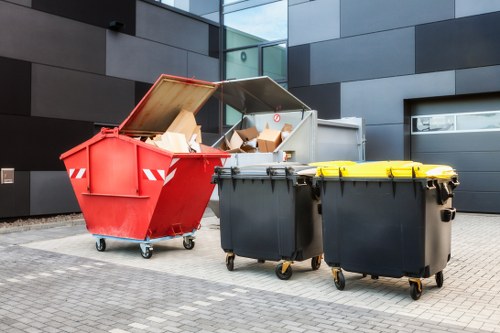 Personal Protective Equipment (PPE) and equipment: The company will provide appropriate PPE such as gloves, high-visibility clothing, safety boots and eye protection. All PPE must be worn where risks cannot otherwise be controlled. Vehicles and handling equipment will be inspected daily and maintained in a safe condition; defects must be reported immediately.
Hazardous Waste and Special Materials
Specific procedures are in place for hazardous waste, including chemical, clinical and asbestos-containing materials. Such items will be segregated, contained and processed in accordance with safe handling protocols. Only trained personnel will manage hazardous loads and they will follow agreed isolation, labelling and transfer procedures to limit exposure and environmental release.Manual Handling and Ergonomics
Manual handling operations will be minimised through use of mechanical aids, correct lifting techniques and team lifts where necessary. Work allocation will consider staff fitness for tasks to reduce musculoskeletal injury. Regular reviews and ergonomic adjustments will address repetitive tasks and workload management.Vehicle operations and site coordination are core to our rubbish collection and commercial waste services. Drivers will conduct pre-start checks, adhere to safe loading practices, use banksman where required and follow traffic management arrangements on customer sites. Reverse maneuvers will be managed carefully with audible warnings and visual spotters when needed.
 Incident reporting, first aid and emergency response: All incidents, near misses and dangerous occurrences must be reported promptly. The company will investigate incidents to identify root causes and implement corrective actions. First aid provisions will be available at operational depots and staff trained to respond appropriately until emergency services arrive.
Communication and consultation with employees are essential. Safety briefings, toolbox talks and clear on-site signage will be used to communicate risks, safe working procedures and expectations. Supervisors will engage staff in risk assessments and seek suggestions for safer working methods; a collaborative approach improves compliance and practical control measures.
 Monitoring and continuous improvement: Health and safety performance will be monitored through regular audits, inspections and performance metrics such as incident rates and completion of planned maintenance. Management will set measurable objectives and review the policy annually to ensure its effectiveness. Non-conformance will be corrected promptly and lessons shared across the team to prevent recurrence.
Roles and responsibilities are defined clearly: senior management provides leadership and resources; supervisors ensure day-to-day compliance; all employees are responsible for following procedures and reporting hazards. Contractors working on behalf of the company must demonstrate their own competence and cooperate with our safety arrangements.
The company will ensure legal and industry standards are understood and used to shape safe systems of work without overstepping jurisdictional specifics. We will maintain records of assessments, training, inspections and maintenance as evidence of our commitment to safe waste removal operations.
Conclusion: This policy represents the framework for achieving a safe, healthy and efficient waste removal service. Regular review and active participation by everyone involved in our commercial rubbish removal operations will ensure that health and safety are embedded into our daily practice. Safety is a shared responsibility and central to delivering reliable waste collection and removal services.
